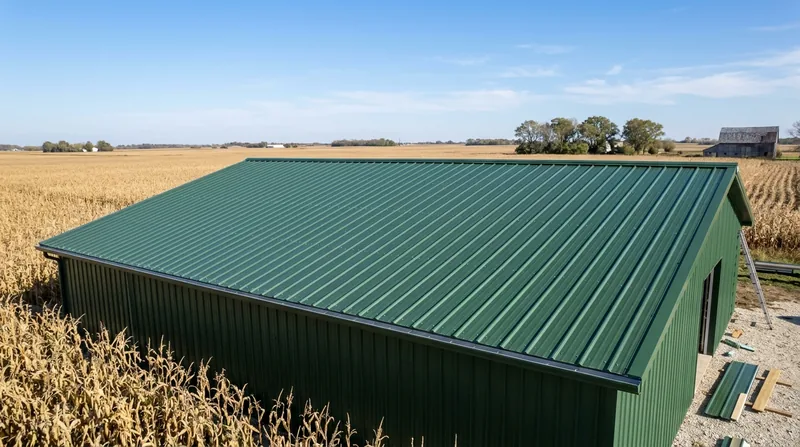




Corrugated & Ribbed Panel Roofing in Aurora, IL
Corrugated & ribbed panel roofing in Aurora is the exposed-fastener workhorse we install on garages, sheds, barns, workshops, and pole buildings across Kane County. Aurora runs from the Fox River and Stolp Island out to flat prairie farmland, and the buildings that carry these panels are usually the detached ones behind the house. Corrugated and R-panel roofs shed snow fast, take hail without shattering, and cost a fraction of standing seam. We install 29-gauge and 26-gauge panels with the right screw pattern, closures, and trim for an Illinois winter. If you want the step-up system for a house, see our standing seam metal roofing page.
Why Exposed-Fastener Panel Roofs Fit Aurora Outbuildings
Aurora gets cold humid continental weather: months of snow on roofs, hard freeze-thaw cycles, hail, and straight-line wind gusts that peel cheap panels off a shed in one storm. The city also has a deep inventory of detached garages, workshops, and pole sheds behind the bungalows on the West Side and the ranches near Phillips Park. Those roofs are low-pitch, wide, and expensive to cover with shingles that crack at 10 below. Corrugated and ribbed panels handle that pitch, that snow load, and that budget.
- We install 29-gauge and 26-gauge panels in Galvalume, SMP-painted, and PVDF colors that hold up to Aurora sun and hail.
- We set screws in the flat of the panel at the correct pattern, with neoprene washers that seal without crushing the metal.
- We close the ridge, eave, and gable ends with foam and metal closures so wind-driven snow does not sift into the building.
- We cut panels on site to length, which limits lap joints and the leaks that come with them.
Every panel run gets checked for straight lines and even screw tension before we call the job done.
Key info: A pole shed off Barnes Road near the Sugar Grove line had 20-year-old corrugated panels with backing screws out and washers rotted flat. We replaced the panels over new purlins and closed the ridge with a vented closure, and the owner has not touched a screw since.
Roofing permits are commonly required for a full replacement or re-roof in Aurora, and thresholds vary by jurisdiction. Verify the current rules with the City of Aurora building department before panels go up.
How We Install Corrugated & Ribbed Panels on Aurora Buildings
We start by measuring the roof and the pitch, then we check the purlins or deck underneath. On a shed or barn we often screw panels straight to purlins; on a garage with solid decking we run a underlayment first. From there the job follows a set order, and we keep the site clean enough that you can still park in the drive.
- We walk the roof and the attic or interior to check for rot, sagging purlins, and old fasteners that will not hold.
- We remove the old panels or shingles and haul them off, then inspect and repair the framing where needed.
- We install underlayment or purlins, then set the first panel square to the eave because every panel after it follows that line.
- We fasten with the correct screw pattern for the panel width, wind zone, and snow load, and we do not overdrive the washers.
- We install ridge caps, eave trim, gable trim, and closures, then seal penetrations around vents and chimneys.
- We sweep the roof, check every screw, and walk the job with you before we leave.
That sequence is why a panel roof that looks simple on paper still needs a crew that has done it in Illinois weather.
Key info: A 1950s ranch near Phillips Park had a detached garage with a low-pitch shingle roof that leaked at the back wall every spring. We stripped the shingles, added purlins, and ran R-panel with a proper eave closure so meltwater stopped backing under the panel edge. The fix took two days and cost less than a new shingle roof on the house.
If the building is closer to a full house re-roof, our metal roof over shingles retrofit page covers that path.
Panel Profiles and Fastening Approaches We Use
Not every outbuilding in Aurora wants the same panel. A hay barn in Sugar Grove, a detached garage in North Aurora, and a workshop in Montgomery can all take exposed-fastener metal, but the profile and gauge change with the span and the look you want. Here is how we match the approach to the building.
| Approach | Description | Best for |
|---|---|---|
| Corrugated panels | Wavy profile, 29-gauge or 26-gauge, screwed through the flat of the wave. | Sheds, garages, and outbuildings where cost leads. |
| R-panel (ribbed) | Square ribs with a flat pan, stronger span, cleaner lines. | Barns, workshops, and pole buildings with wider purlin spacing. |
| 5V crimp | Classic V-rib pattern, light and easy to trim on site. | Older outbuildings and repairs where matching existing panels matters. |
| Concealed-fastener upgrade | Standing seam panels with hidden clips for a house or porch. | Residential roofs where the screw heads should not show. |
We will tell you when a panel roof is the right call and when a concealed-fastener system is worth the extra money.
Corrugated & Ribbed Panel Roofing Cost in Aurora: What to Expect
Panel roofs start around $5.50 per square foot installed for a straightforward shed or garage, and most Aurora outbuilding jobs land between that figure and roughly $9 per square foot depending on gauge, profile, and how much tear-off is involved. A 26-gauge R-panel in a premium color with new purlins sits at the top of that range. A 29-gauge corrugated re-cover over sound framing sits at the bottom.
Access moves the number more than anything else. A garage with a clear drive and a low pitch is fast work. A barn with a steep roof, a soft yard, and trees tight to the eaves takes longer and needs more staging. Height, panel length, tear-off layers, and whether we are replacing rotten purlins all push the price up. We put those items in writing so the estimate matches the invoice.
Get two or three estimates and compare the gauge, the screw pattern, and the closures, not just the bottom line. A cheap quote that skips closures or uses 30-gauge panels will cost more in five years. Our full pricing overview lays out the ranges we work from.
Corrugated & Ribbed Panel Roofing Near Me: How to Vet a Contractor Around Aurora
You want a contractor who has actually screwed down panels in Kane County weather, not a crew that mostly does shingles and takes a metal job when it is slow. Ask for the license and insurance certificate, and confirm the coverage is current. Ask for local references on outbuildings, not just houses. Ask who pulls the permit and who handles the inspection.
Historic districts and HOA design review can restrict panel profile and color, especially on structures visible from the street in older Aurora neighborhoods. Recover over existing shingles is limited by code to a set number of layers, so a contractor who says "we can just go over it" without checking is a warning sign. Get the scope in writing, including gauge, fasteners, and closures. When you are ready, contact us for a free estimate and we will walk the building with you.
Corrugated & Ribbed Panel Roofing in Aurora: Pricing Guide
| Service | Price | Details |
|---|---|---|
| Corrugated panel roof, shed or garage | Starting at $5.50/sq ft | 29-gauge corrugated panels, screws, closures, and basic trim included; tear-off and rot repair add cost |
| R-panel (ribbed) roof, barn or workshop | Starting at $6.75/sq ft | 26-gauge R-panel with ridge, eave, and gable trim; wider purlin spacing and height move the rate |
| Tear-off and disposal of old panels or shingles | Starting at $1.25/sq ft | Removal, haul-off, and dump fees; number of old layers and site access change the figure |
| Purlins, framing, and deck repair | On estimate | Rotten purlins, sagging framing, or soft decking need an on-site look before we quote a number |
| Travel | Included | In Aurora and surrounding Kane County towns, no separate call-out or mileage fee |
| Estimate | Free | Response within 24 hours at (331) 336-1471, no obligation to book the job |
Indicative pricing, the exact cost depends on square footage, finish, and site access. Free personalized estimate within 24h at (331) 336-1471.


